7 Reasons Your Daughter Worries About Your Blood Thinner More Than She Lets On
From the ER physician who meets the daughters at minute forty, and has to tell them what we did not know.

She has never said any of this to you. She has said it to her husband, at eleven at night, in the flat tone people use for the fear they have already had a hundred times. It is not your diagnosis that keeps her awake. It is a picture she cannot get rid of.
You, on a floor somewhere. The people helping you working quickly and well and with no idea what you are on. She does not know the clinical detail. She does not need to. She has understood the shape of it perfectly, which is why she checks your arms when she visits and thinks you have not noticed.
I want to tell you two things. The first is that she is right, and I will show you exactly why in about sixty seconds of detail. The second is better: this is fixable in about ten seconds, by you, without a single conversation about it.
17,000+ women on blood thinners wear one daily.
1. It is not the diagnosis that keeps her up.
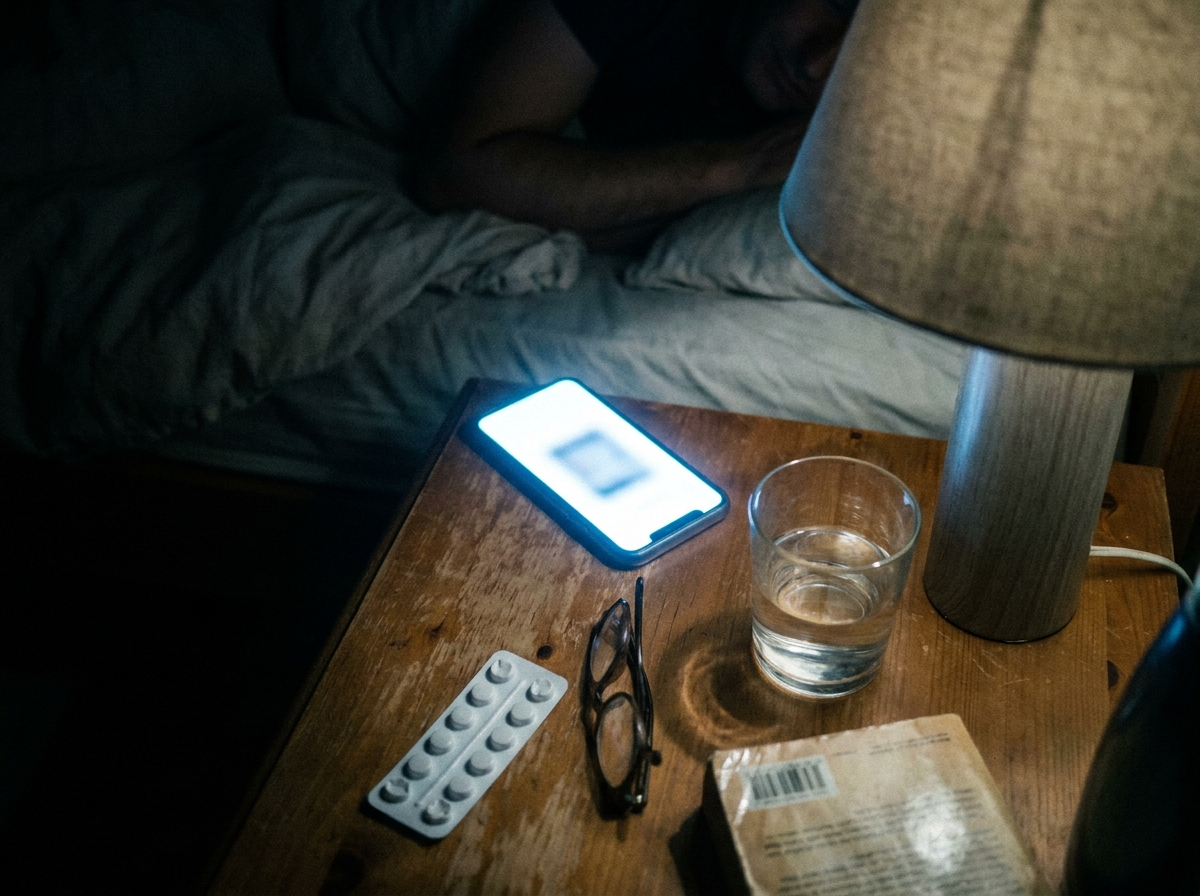
Ask her and she will say she is fine about it. She researched your medication when you started, she knows the stroke risk it prevents, and she is genuinely glad you are on it. None of that is what she lies there thinking about. What she thinks about is a phone ringing at an hour when phones do not ring for good reasons.
I meet her version of this constantly. The daughter who arrives at the department forty minutes behind the ambulance, still holding her car keys, and whose first question is never about the fall. It is always the same question, and she asks it before she has taken her coat off. "Did you know she was on a blood thinner?"
👉 See what happens in the sixty seconds before she gets that call →
And I have had to answer that question both ways, which is the only reason I am telling you any of this.
2. She is right to worry, and here is the sixty seconds why.
On a blood thinner, the first minutes decide most of it. A bleed does not announce itself; it can run quietly under skin that looks completely normal while you are talking and making sense. The people who reach you have to act on what they can see on your body, and they have to choose a drug and a hospital before anyone has found a relative to ask.
If nothing on you says what you are taking, they are working blind in the minutes that matter most. That is not a scare story, it is just the sequence. 2.6 million people a year are treated wrong at the scene because nobody there knew, and it is almost never anyone's fault.
👉 See the first place a crew actually looks →
Which means the fix is not really about information at all. It is about where you put it.
3. They check the wrist before a phone or a purse.

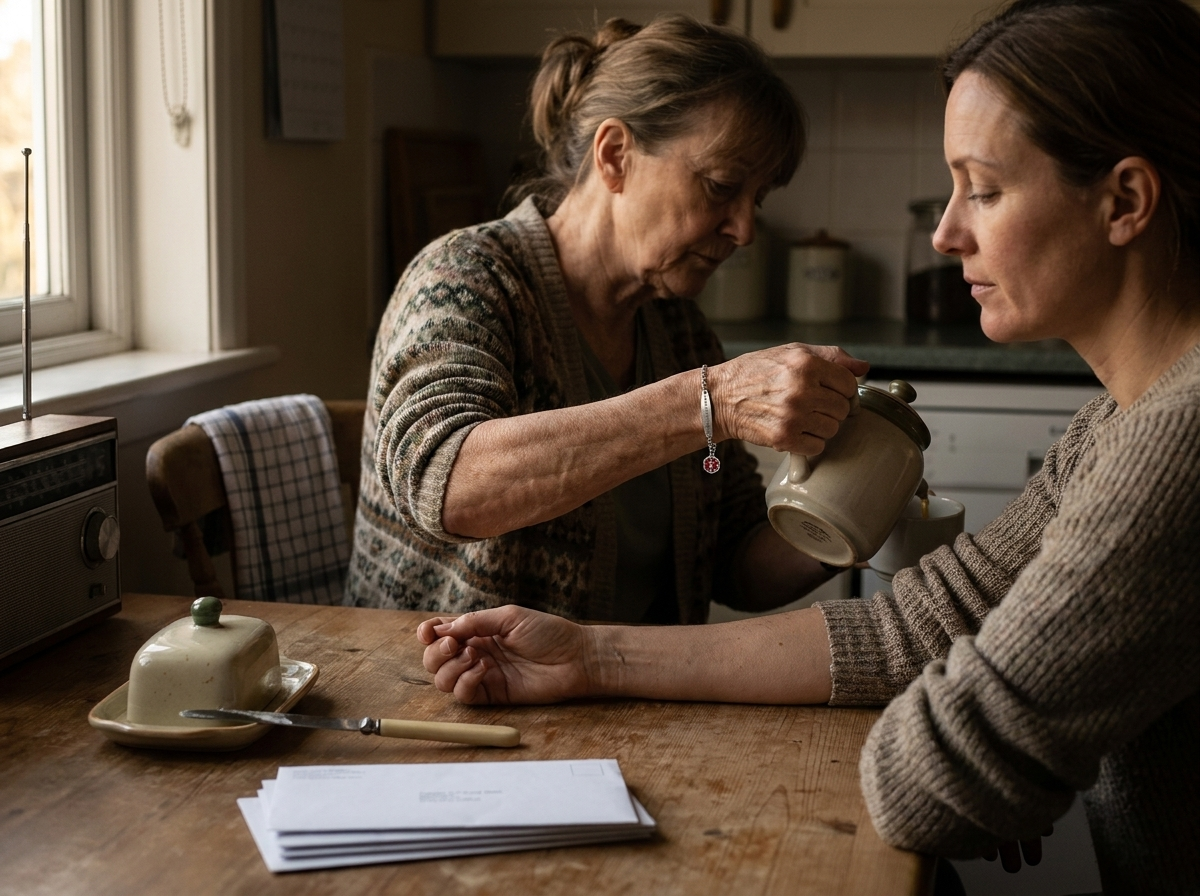
Every crew is trained in the same order, and the wrist comes early because that is where the pulse is. Your wrist is in a stranger's hand within seconds of them reaching you. A purse in the other room, a wallet card behind a bank card and a locked phone are all in places nobody is going to be in for another half hour.
This is the part daughters get wrong, kindly and expensively. They write the card. They set up the phone screen. Both require somebody to go looking, at a moment when nobody is looking anywhere. The wrist is the one place the answer arrives without being searched for.
👉 See what it changes at home →
And what it changes at home is not really about emergencies at all.
4. Three things that stop the week it arrives.

She stops scanning your arms for bruises when she visits. You have watched her do it and said nothing, and she has no idea you can see her doing it. She stops bracing when your name lights up her phone. And she stops lying awake over a call she can do nothing about, which is the one she has been rehearsing for two years.
None of that is because the bracelet makes you safer to be around. It is because it answers the exact question she has been unable to stop asking. The fear was never that you would fall. It was that nobody would know what you were on when you did. That question now has an answer, in steel, on your wrist.
And here is the part I most want you to hear, because it is the part nobody offers her generation.
5. You never have to sit through the conversation.
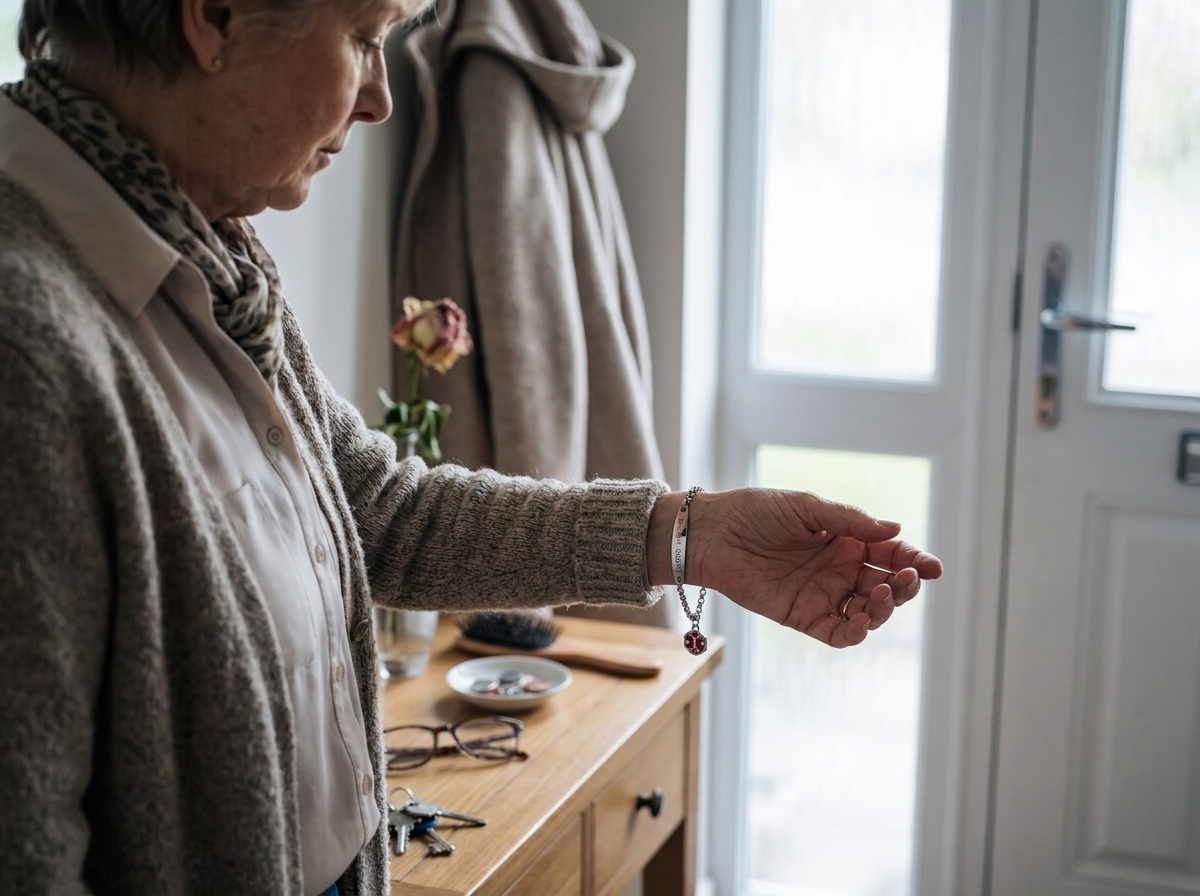
You know the conversation I mean. The one where your children sit slightly too upright and use the word "just", and somebody has already looked at brochures. Every product in this category arrives that way, as somebody else's idea about you, and that is exactly why so many of them end up in a drawer. This one you can simply already be wearing.
She notices it on a Sunday. You do not make a speech about it. There is nothing for her to persuade you of, because it is done, and it was done by you. You quietly handle the one thing she is afraid of, on your own terms, and she never gets to worry that you were talked into it.
👉 Do it before the conversation happens →
Which leaves one objection, and it is the one I hear from the women I most admire.
6. That isn't paranoia.
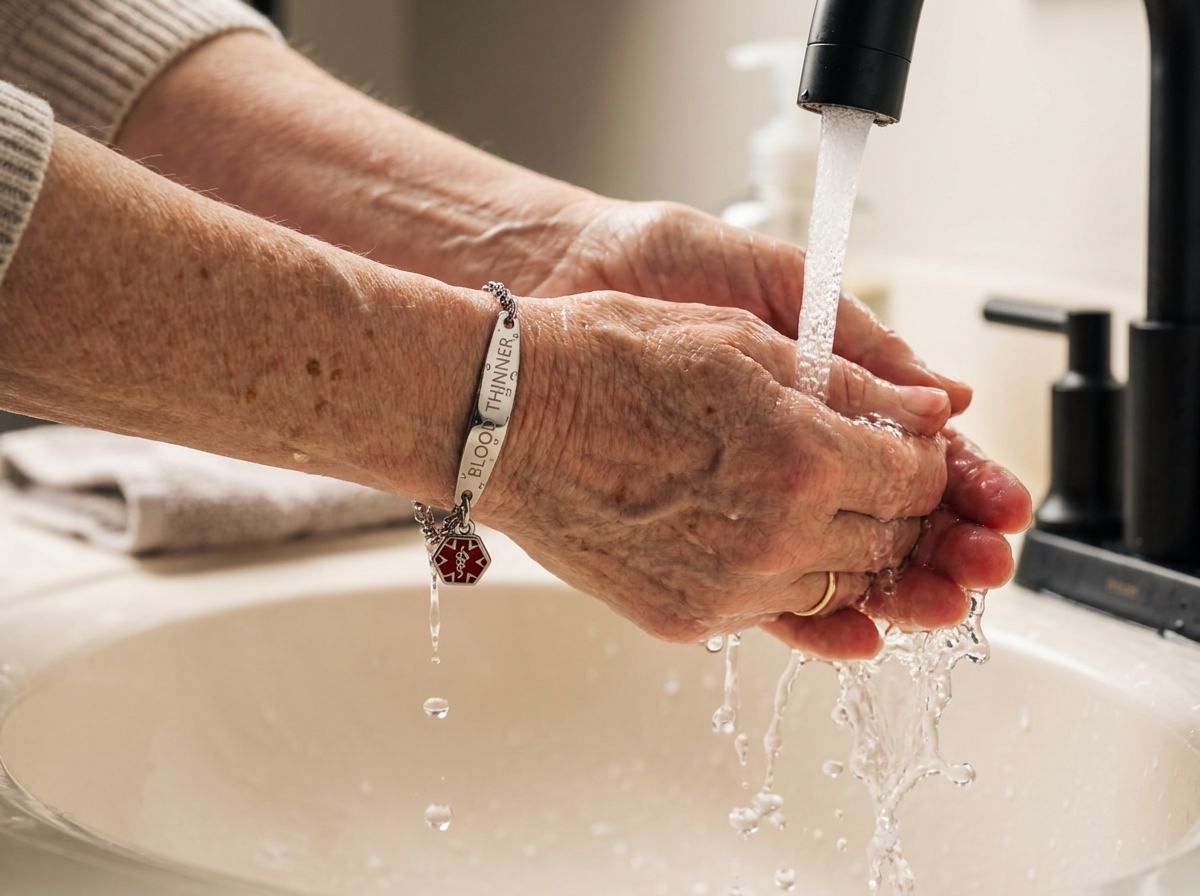
The objection is never about the money and it is never about the steel. It is "I don't want to start being someone who prepares for things like this." I understand it better than you would expect. Preparing can feel like conceding, and you have spent your whole life not conceding, which is presumably how you have got this far.
So here is the reframe I would offer at a bedside. This is not planning to fall. It is handling a condition you did not choose, before anyone has to ask you to. Wearing your own medical information is not frailty any more than carrying your own house keys is. It is just being correctly identified.
And if it does not do that for her, I would rather you sent it back.
7. If it doesn't settle her, send it back.
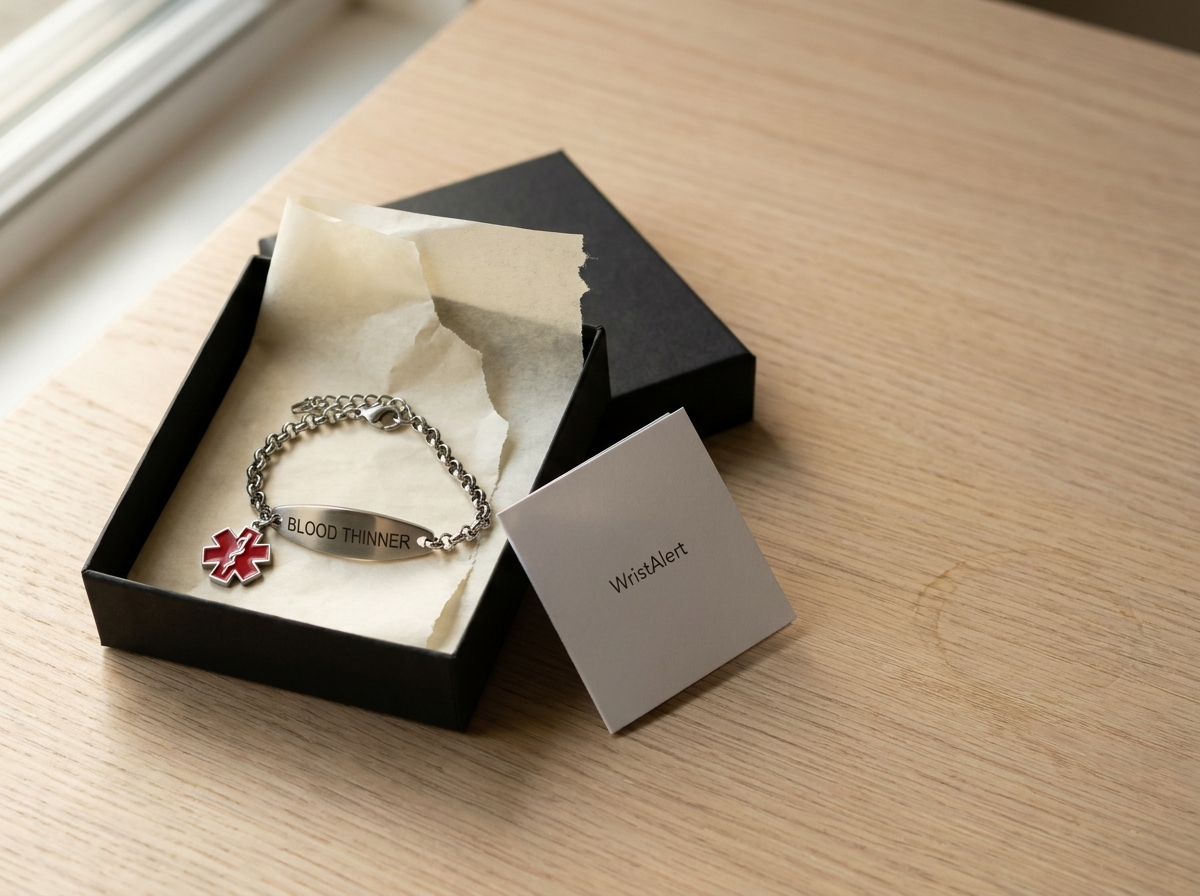
The guarantee on this is deliberately written the odd way round. It is not about whether you like the finish. Wear it for 60 days, and if it has not put her mind at rest, send it back for every penny. Both free gifts stay yours regardless. That is the actual promise, because settling her is the actual product.
Lose it inside the first year and it is replaced free, no questions and no proof required. The engraving is guaranteed for life. No subscription, ever, which matters more than it sounds: there is no renewal date on which somebody has to decide again whether you are still worth the fee.
She has been carrying this quietly for a long time. You can put it down for her this week.
Two Free Gifts. Zero Risk. One Wrist.
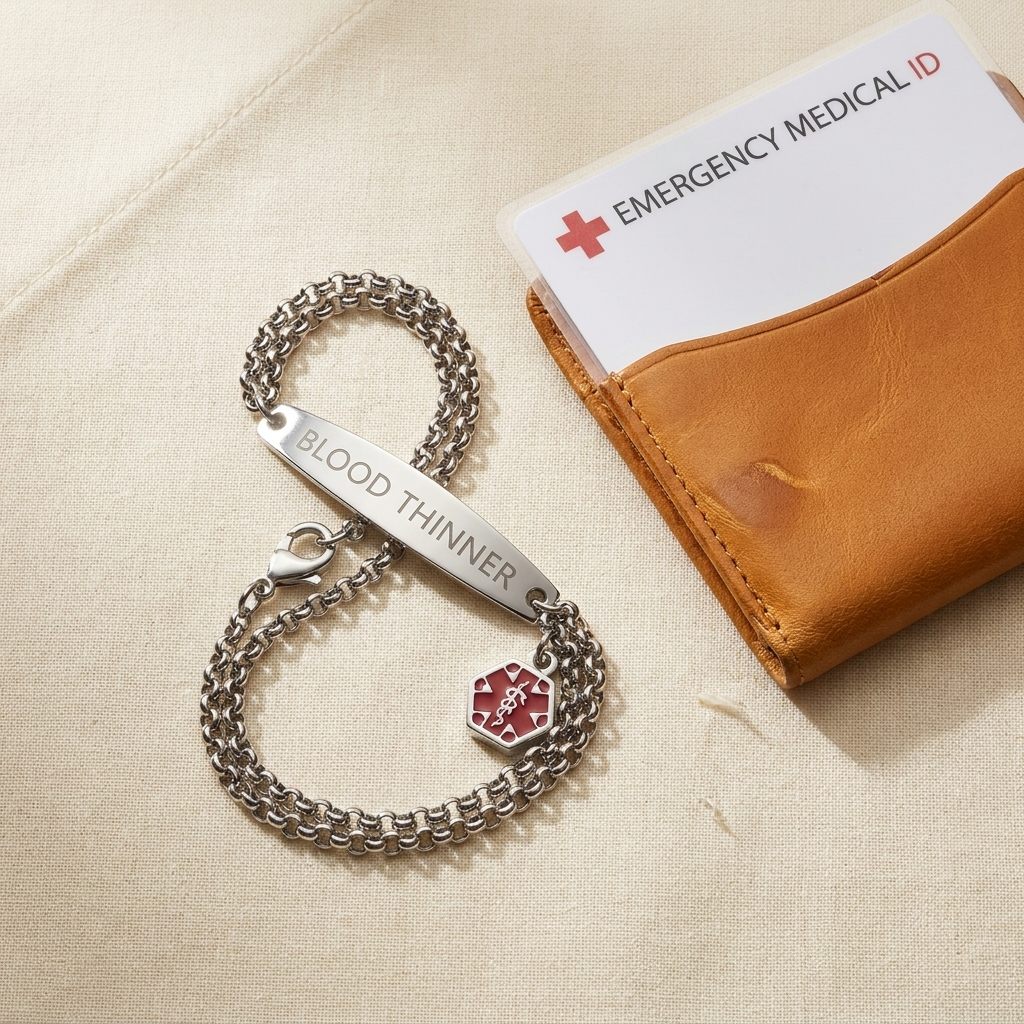
316L surgical steel, laser-etched with the category so it stays accurate through every switch your cardiologist makes. It ships with the Emergency ID Card and a protective case, both free.
Ten seconds to put on. It stays on, in the shower and the garden and asleep. Wear it for 60 days, and if it has not put her mind at rest, send it back for every penny and keep both gifts.
The engraving carries a lifetime warranty, and the Lost-Bracelet Promise replaces it free in your first year. No subscription, ever.