7 Things Women on Eliquis for AFib Should Know (and Why the Bruise Is the Least of It)
What changes in the first sixty seconds — and who has to know what you are taking.
It tends to go the same way. A cupboard door in the morning, barely worth mentioning. She feels fine all day, and only goes in because her daughter will not let it go. On an anticoagulant, a knock to the head is not a wait-and-see — it is a scan, before anybody is convinced there is a problem.
You are on the same kind of drug. And you have the same two facts sitting next to each other that nobody has ever asked you to put together: a rhythm problem you cannot feel, and a change in your blood you only ever see when you bruise. Both are true right now, this morning, while you read this. On the night it matters, somebody kneeling over you has about sixty seconds to work out which one they are looking at.
This is not an argument against the pill. You and your cardiologist did that arithmetic already, and almost everyone comes out in the same place. This is about the part that does not get covered in that appointment: what your blood is doing on the day something goes wrong, and how anybody standing over you is supposed to know.
1. Your Pill Is Doing Two Opposite Things at Once
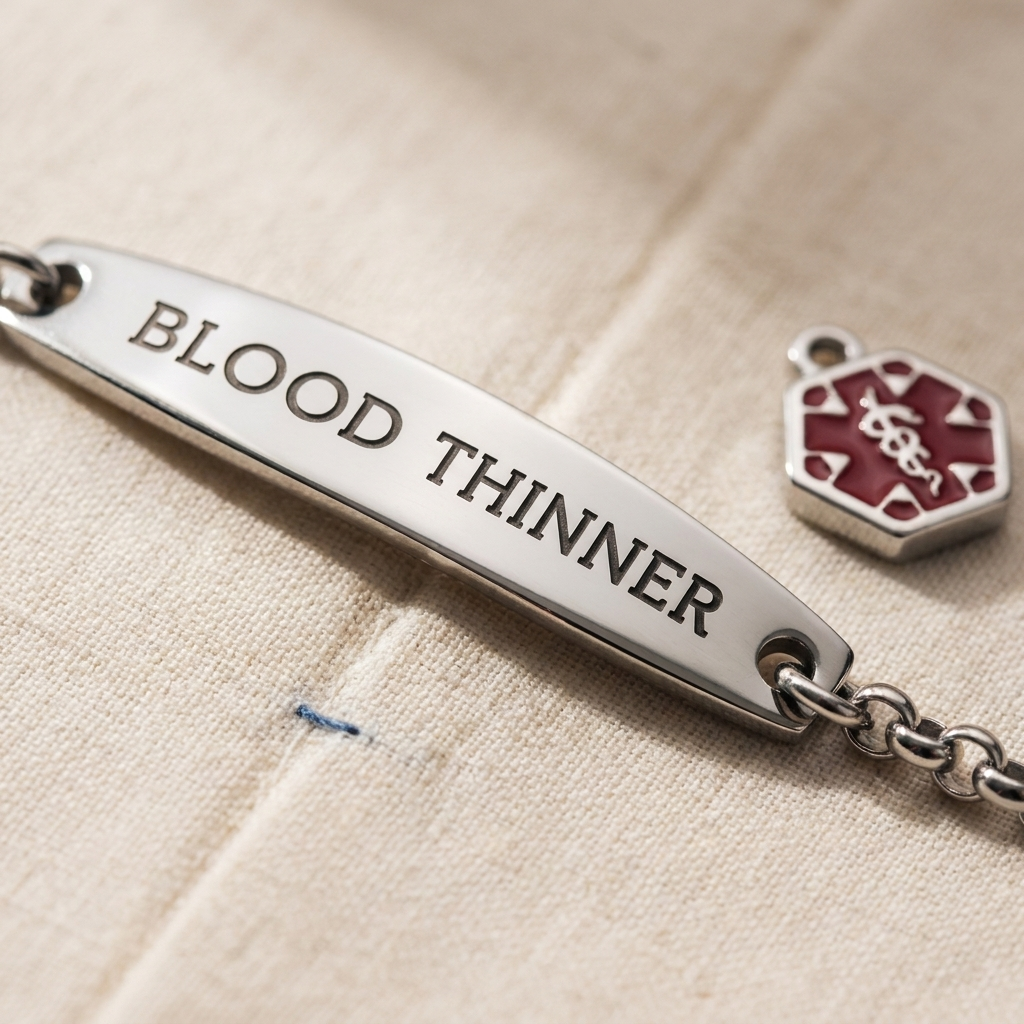
Eliquis is not a blood thinner in the way the name suggests. It stops your blood forming the clot that would travel from your heart to your brain. That is the stroke it was prescribed to prevent, and it does that job every day without you noticing a thing.
The same action has a second consequence, and it is the one nobody sits you down for. Anything that bleeds, bleeds for longer. Not more dangerously in ordinary life. Longer. On an ordinary Tuesday that difference is invisible. In an emergency it is the whole picture.
👉 See what those two words tell a crew →
You have already seen the second one happen. You just filed it under clumsy.
2. The Bruise Is Not Damage. It Is a Readout.
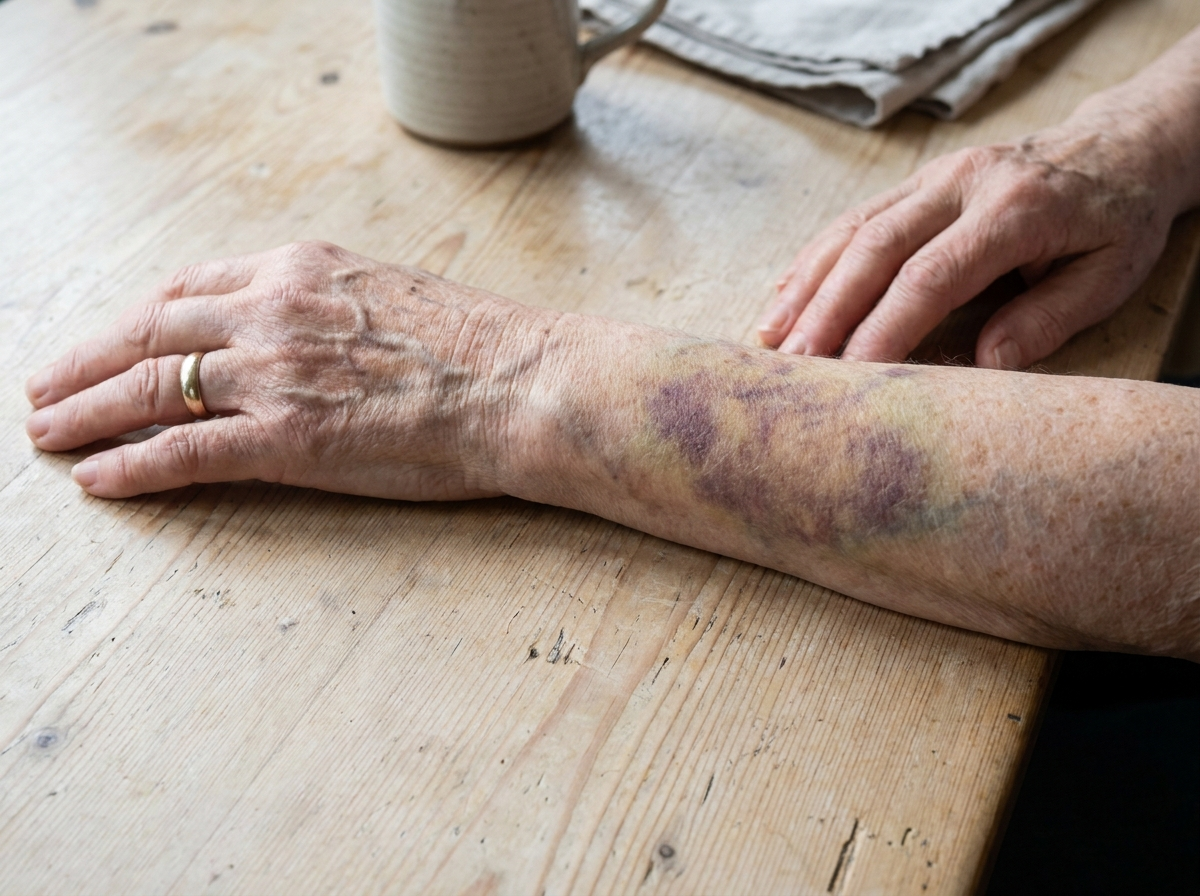
You wake up with a bruise the size of a hand and no memory of earning it. The freezer door. The car door frame. A cupboard you have opened ten thousand times. You cannot feel your AFib and you cannot feel your Eliquis, so the bruise is the only place either shows up.
That is not your body failing. It is your body reporting. The bruise is the one visible readout of a change happening everywhere else at the same time, in places you cannot inspect and would not feel.
👉 See what the readout means at 3am →
Which is fine on your forearm, where you can watch it. The problem is the places you cannot.
3. The Knock You Do Not Remember Is the One That Matters

Here is the part that does not always come up in the appointment. On an anticoagulant, a knock to the head does not have to bleed straight away. It can bleed slowly, over hours, while you feel completely normal. You make dinner. You watch your programme. You go to bed.
That is the actual exposure, and it is nothing like the picture people carry. It is not collapsing in front of somebody. It is being fine, being alone, and being asleep by the time it stops being fine.
👉 See what speaks for you while you sleep →
And if somebody does reach you, the next thing that happens depends entirely on one piece of information.
4. What Changes the Moment They Know
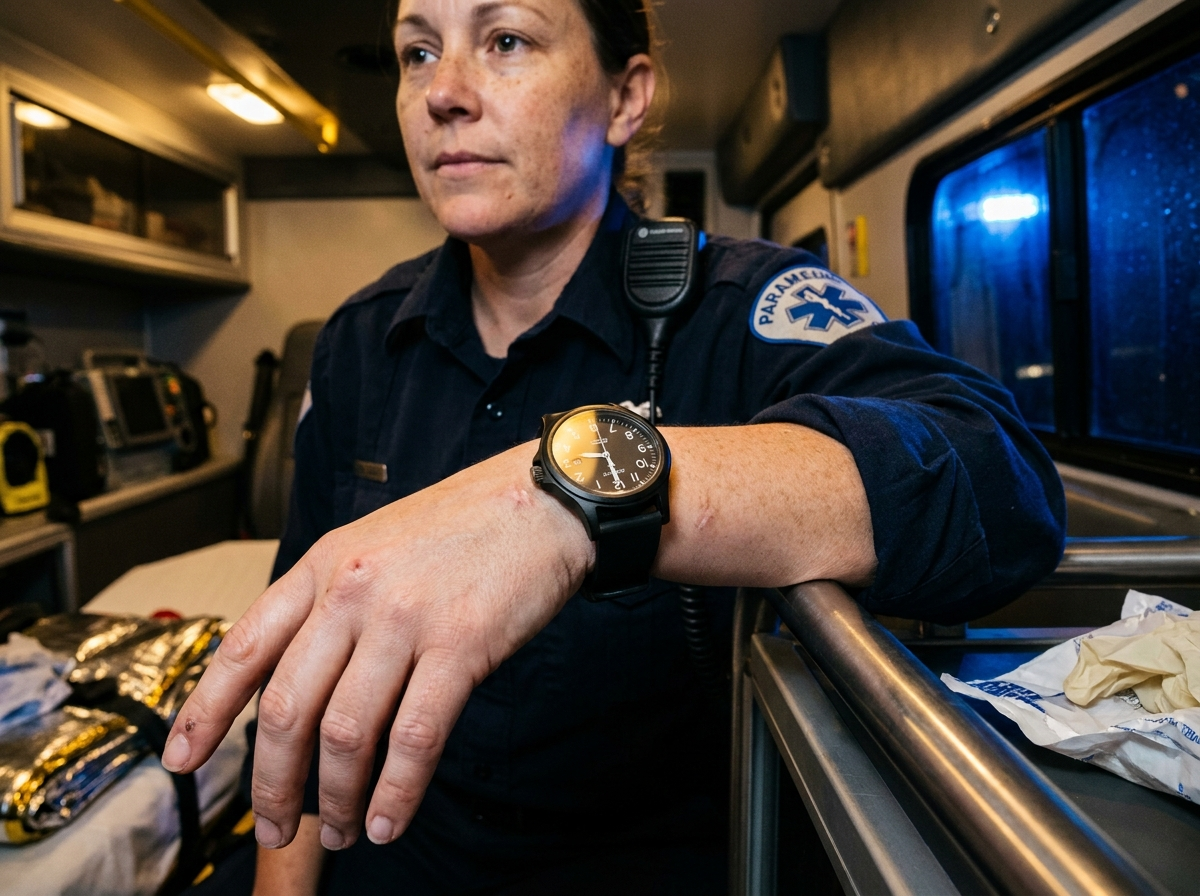
Every other page will tell you the wrong first drug is dangerous and leave it there. Here is what actually changes in the back of an ambulance and the first ten minutes of a resus room, the moment somebody reads the words BLOOD THINNER on your wrist.
You get scanned sooner, because a head injury on an anticoagulant stops being a wait-and-see. The team starts looking for a reversal agent before the scan result comes back, rather than after it. And nobody gives you anything that makes it worse while they are still guessing. None of that is a favour. It is protocol, and it only starts when somebody knows.
Two Words. One Wrist.
Put the words where the decision gets made.
The bracelet is $24.99, once. It is the only thing you own that is still talking when you are not.
GET MY WRIST-CHECK BRACELET →5. It Decides Which Hospital, Even When You Are Awake
This is the one that surprises people. The bracelet does not only work when you are unconscious. It works hardest when you are awake, talking, and telling everyone you are fine.
The reason crews want to know about a blood thinner early is that it can change which hospital they drive to when the injury looks minor. Not every hospital keeps reversal agents on the shelf. A fall that looks like nothing is exactly the fall where that decision gets made, and it gets made off what they can see on you.
👉 See where a crew looks first →
All of which assumes you are actually wearing it. Which is where most women say no, and they are not wrong to.
6. You Are Not Fragile, and It Should Not Say You Are
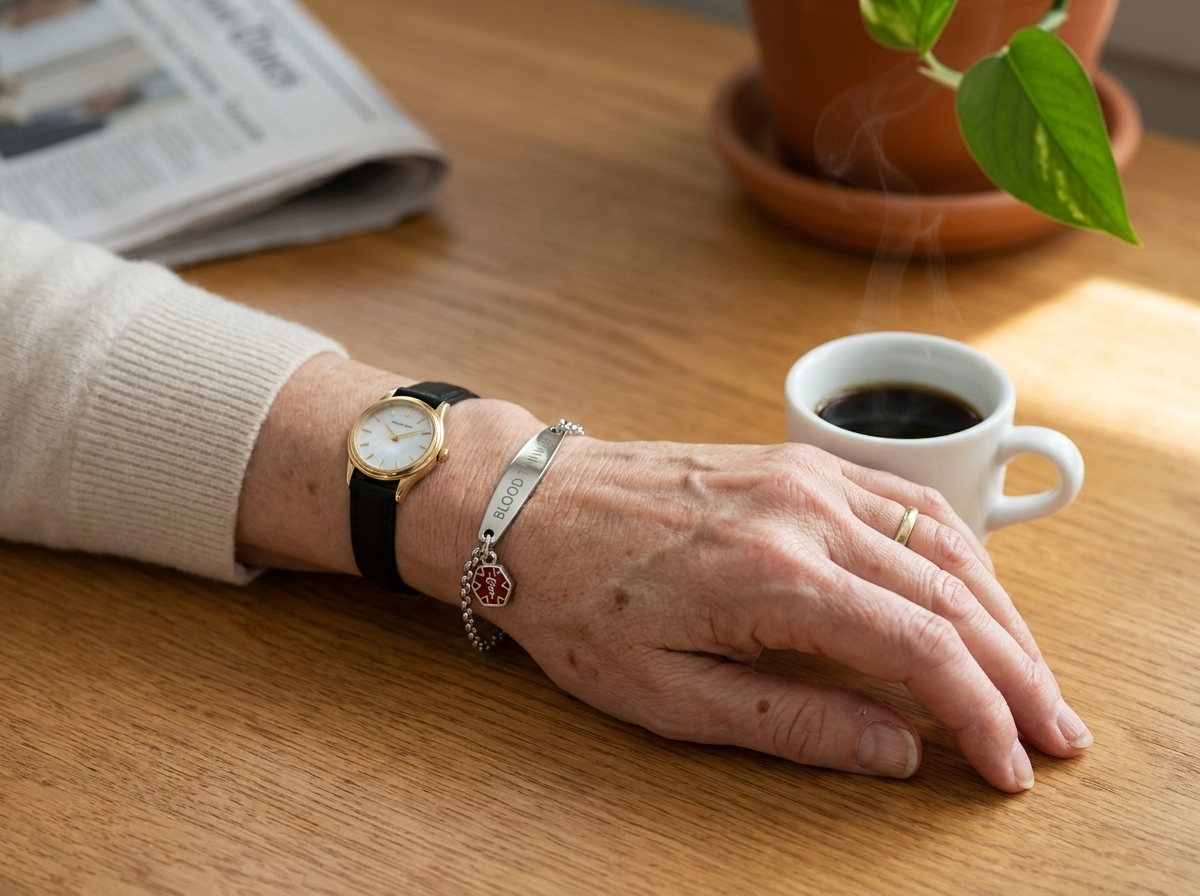
You still drive. You still do your own garden. You have never once thought of yourself as a patient, and a diagnosis you cannot feel has not changed that. So do not wear anything that argues with you about it.
The old tags were hospital equipment with a chain on. This one is a polished plate on a rolo chain. The people who ask about it think you bought it for yourself. The people who need to read it read it in one look. Both of those are the point, and only one of them is medical.
👉 See it on an ordinary wrist →
The women who wear one every day tend to describe it the same way.
7. What They Actually Say
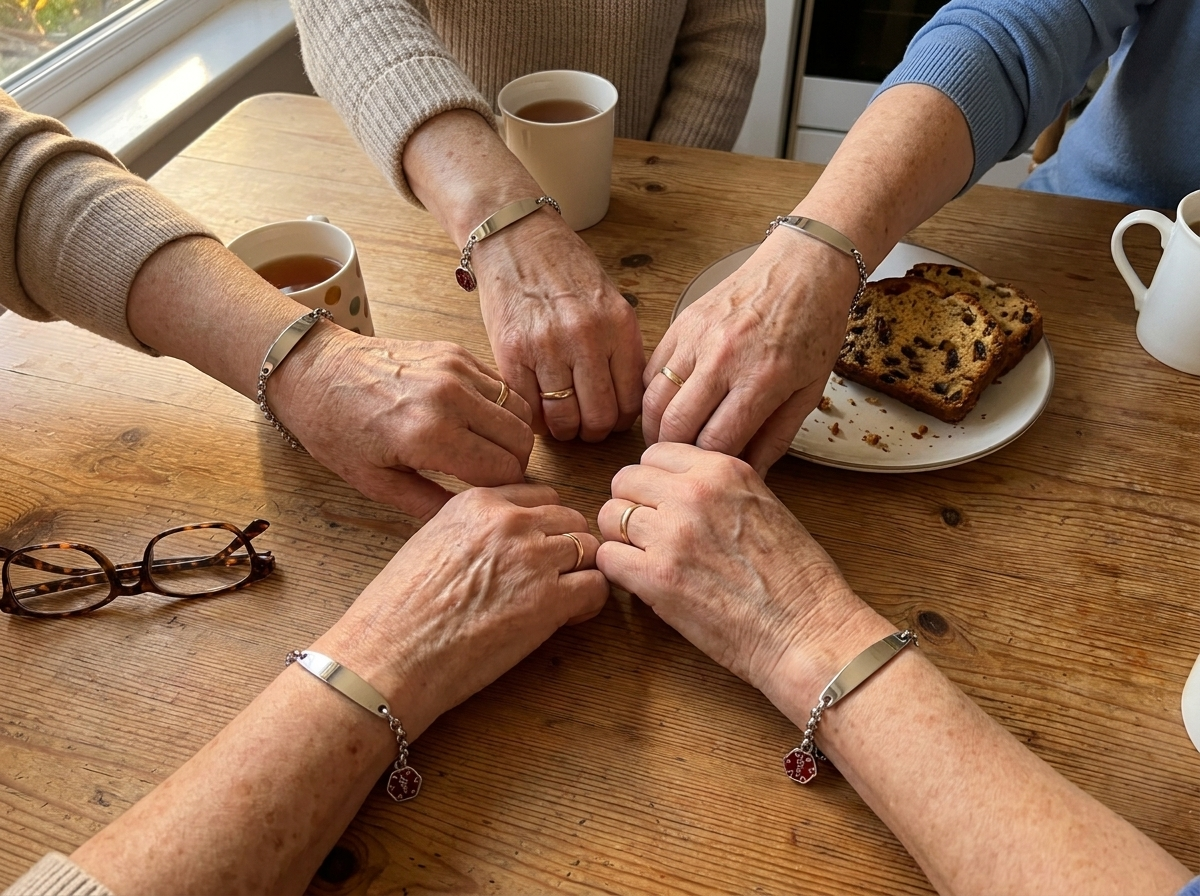
They do not call it a medical ID. They call it the thing that means they can stop thinking about it. Women on a blood thinner wear one across the US, Canada, the UK and Australia, and the sentence that comes back most is a version of the same one: one less thing to worry about.
That is a smaller promise than this category usually makes, and it is the true one. It does not stop the fall and it does not fix your rhythm. It closes the one gap you cannot close yourself: the minutes when somebody has to decide what is wrong with you and you are not available to tell them.
Two Free Gifts. Zero Risk. One Wrist.
Every Wrist-Check Bracelet ships with two free gifts: the Emergency ID Card and its case, the paper backup that carries the name of your specific medication.
Wear it for 60 days. If it is not right, send it back for a full refund and keep both gifts. The engraving carries a lifetime warranty, and the Lost-Bracelet Promise replaces it free in your first year, no proof required.
You will see the exact offer on the next page.
Last Word
Sale ends in 00:00
Two words. One wrist. One decision.
You take a pill every morning for a condition you have never felt. This is the ten seconds that makes it legible to anyone else.
GET PROTECTED TODAY →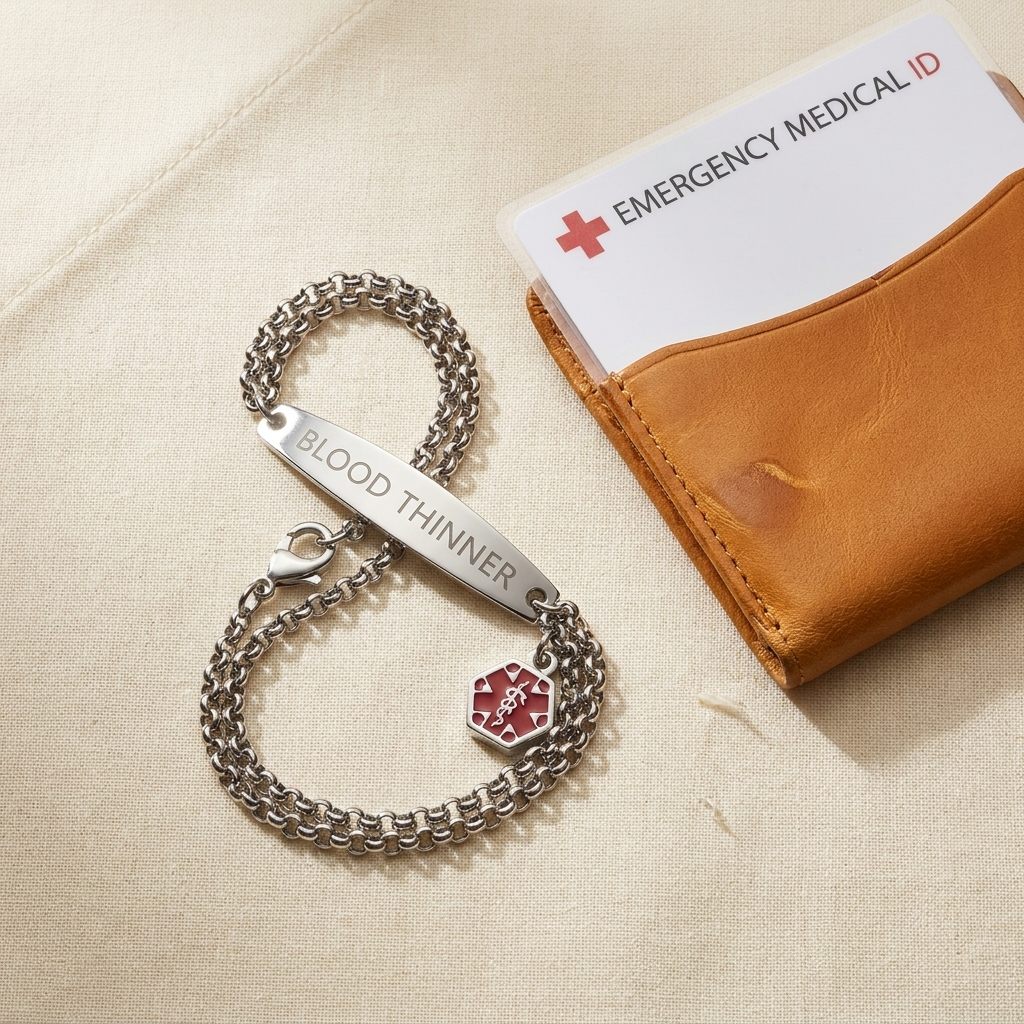
This page is an advertisement for WristAlert. It is general information, not medical advice, and it is not a substitute for guidance from your doctor or pharmacist. The Wrist-Check Bracelet is a medical ID accessory; it does not diagnose, treat, or prevent any condition. Never change or stop a prescribed medication without speaking to your prescriber.