7 Reasons an Ordinary Fall Becomes a Bleed We Cannot Stop When You Are on a Blood Thinner
From the ER doctor who decides what goes into your veins before anyone knows your name.

The fall is almost never the problem. A woman catches the counter with her temple stepping back from the sink, goes down on a wet bathroom floor, and gets up apologising for the fuss. On anybody else that is a bruise and a bad week. On a blood thinner it is a question with a clock on it, and one wrong push in the next sixty seconds turns a bruise you would have walked away from into an internal bleed we cannot stop.
That decision is not made in my department. It is made at the curb, by a stranger with sixty seconds and your wrist. Your medication is doing its job. It prevents the clot. It cannot talk to me, and that is the gap nobody names in clinic. I ordered three of these last year. One for my sister, one for my best friend, one for me.
1. The fall is survivable. The sixty seconds after it decide whether you keep that.

Most of the falls I see would be nothing. A wet tile, a rug edge, a step misjudged in the dark on the way to the bathroom. On anyone else it is a bruise, an ice pack and a story she tells at bridge. On a blood thinner the same fall opens a question underneath the skin, and nothing visible on the outside tells anybody standing over her which way it is going.
So the fall is not the emergency. What happens in the sixty seconds after it is the emergency, and it is decided by whoever reaches her first, working from what they can see on her body and nothing else. She can be talking. She can be apologising. It changes nothing about what is happening underneath.
👉 See what a crew reads first →
Because in that minute, somebody is already choosing what to put in your arm.
2. In that minute, I am deciding what goes into your veins.
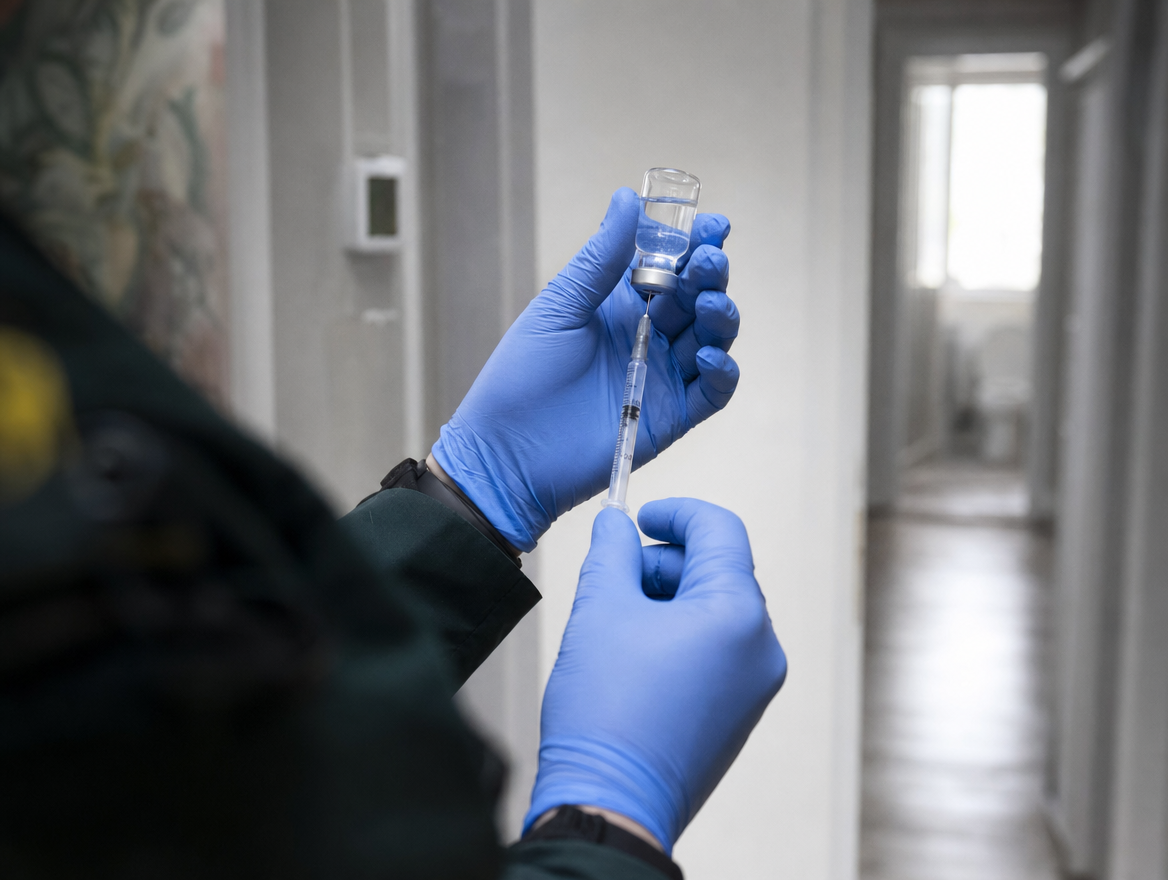
People assume the decisions that matter happen in my department, under lights, with a chart. They do not. The IV that gets run, the drug that gets pulled, the hospital you get routed to: all of it is chosen at the curb, by a stranger with sixty seconds and your wrist. By the time you reach me, it is already circulating.
There is no undo on that. It is not a note that can be corrected upstairs. It is a drug that is in you. Your medication is doing exactly what it was prescribed to do, and it prevents the clot that would have killed you. It cannot talk to me. That is the gap nobody names in clinic.
👉 See what speaks when you cannot →
And there is one specific push I spend my working life hoping I have not just made.
3. One wrong push, and the bruise becomes a bleed we cannot stop.
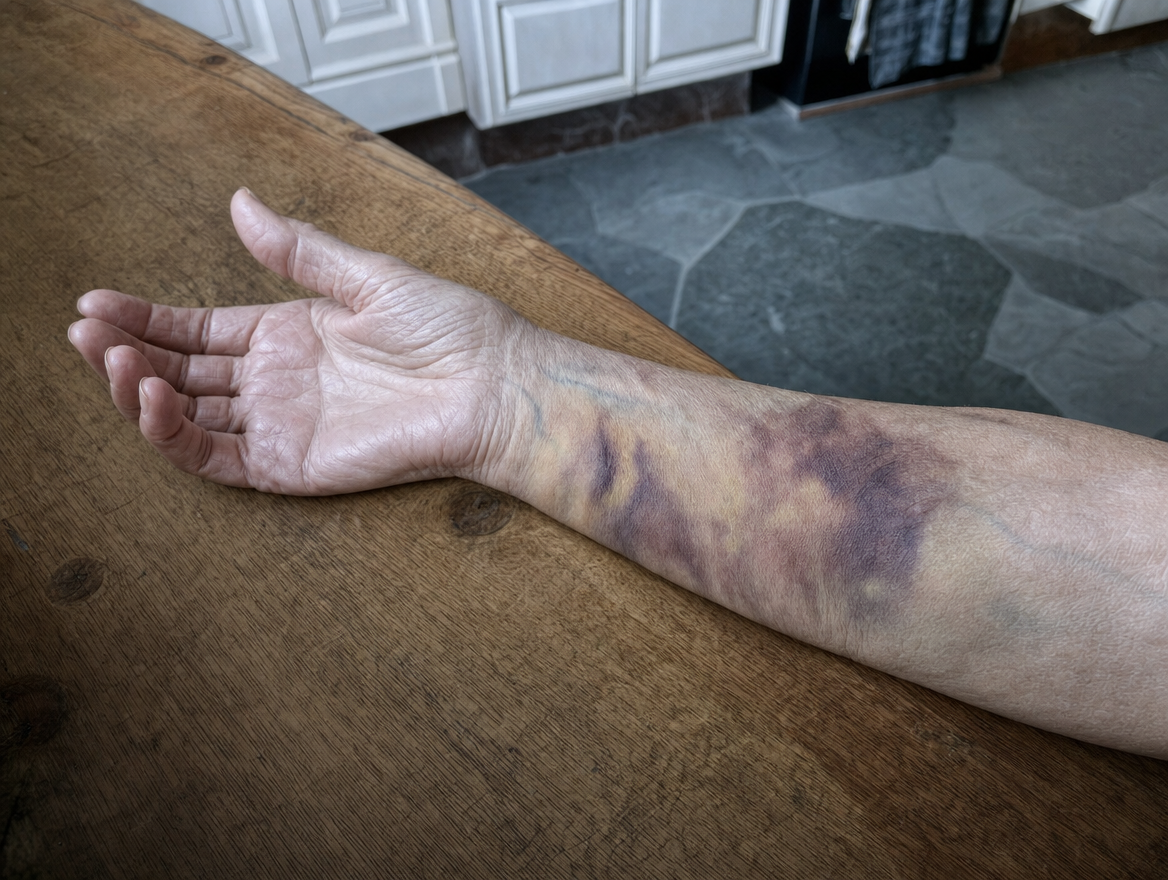
Here is the specific thing I am afraid of, and it is not dramatic. It is ordinary. If I do not know you are on Eliquis or Xarelto or warfarin, the first drug I reach for can be the one that makes the bleeding worse. Not the one that fails to help. The one that makes it worse, faster, in a place I cannot see.
That is the whole distance between the two outcomes. A bruise you would have walked away from becomes an internal bleed we cannot stop. Nothing about the fall changed. Nothing about your body changed. The only variable was whether the person kneeling over you knew what was already in your blood. That is not a different accident. It is the same accident with one fact missing.
👉 Put the words where we already look →
Which brings us to the four things you are relying on to tell us, and where each one of them actually is.
4. Your purse is in the other room. Your phone is on the nightstand.

Every woman I treat has a plan, and every plan lives somewhere else in the house. The card is in the purse on the hall table. The list is in the kitchen drawer. Your daughter has it on her phone, three states away and asleep. None of it is on your body at the moment it is needed, which is the only moment that was ever going to count.
I want to be blunt about the phone, because most women are quietly relying on it. I have never unlocked a patient's phone at a scene. There is no time, and it is locked anyway. Wallets get searched at minute five, in my department, by somebody doing paperwork, long after the first drug has gone in.
5. Your watch reads your heart. It cannot read your blood.
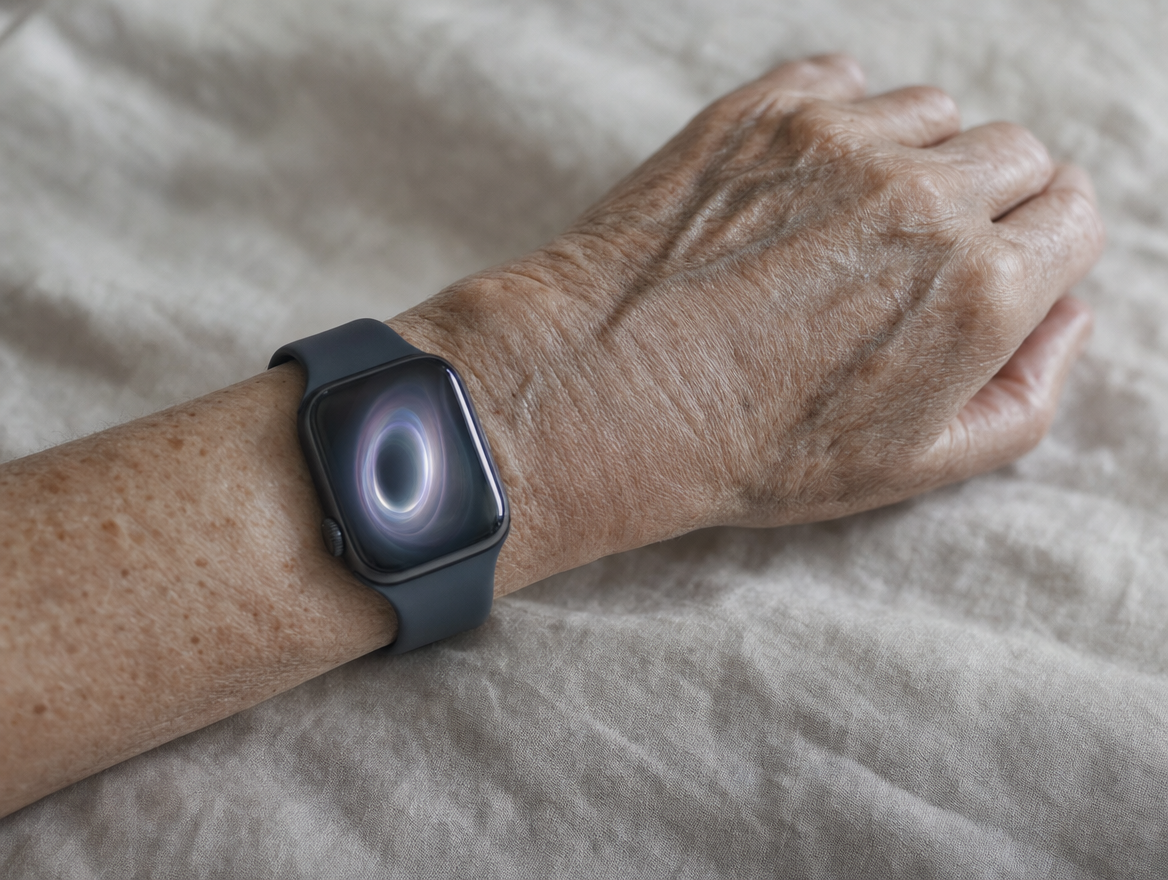
The watch is the one that surprises people, and it is the best of the four, because it is genuinely on you. That is more than the purse manages. But it tells me your heart rate, and heart rate is not the number that decides the drug. It cannot tell me what is in your bloodstream, which is the only thing I need in that minute.
It also needs charge, a screen somebody has to wake, and a menu somebody has to know to go looking for while you are on the floor. In the first sixty seconds, nobody is navigating your watch. They are looking at your wrist, and those are two completely different things.
👉 See what a crew is trained to look for →
Because there is one place every crew in this country is trained to go first, and it is not a decision any of us make.
6. The wrist is the one place every crew is trained to look.
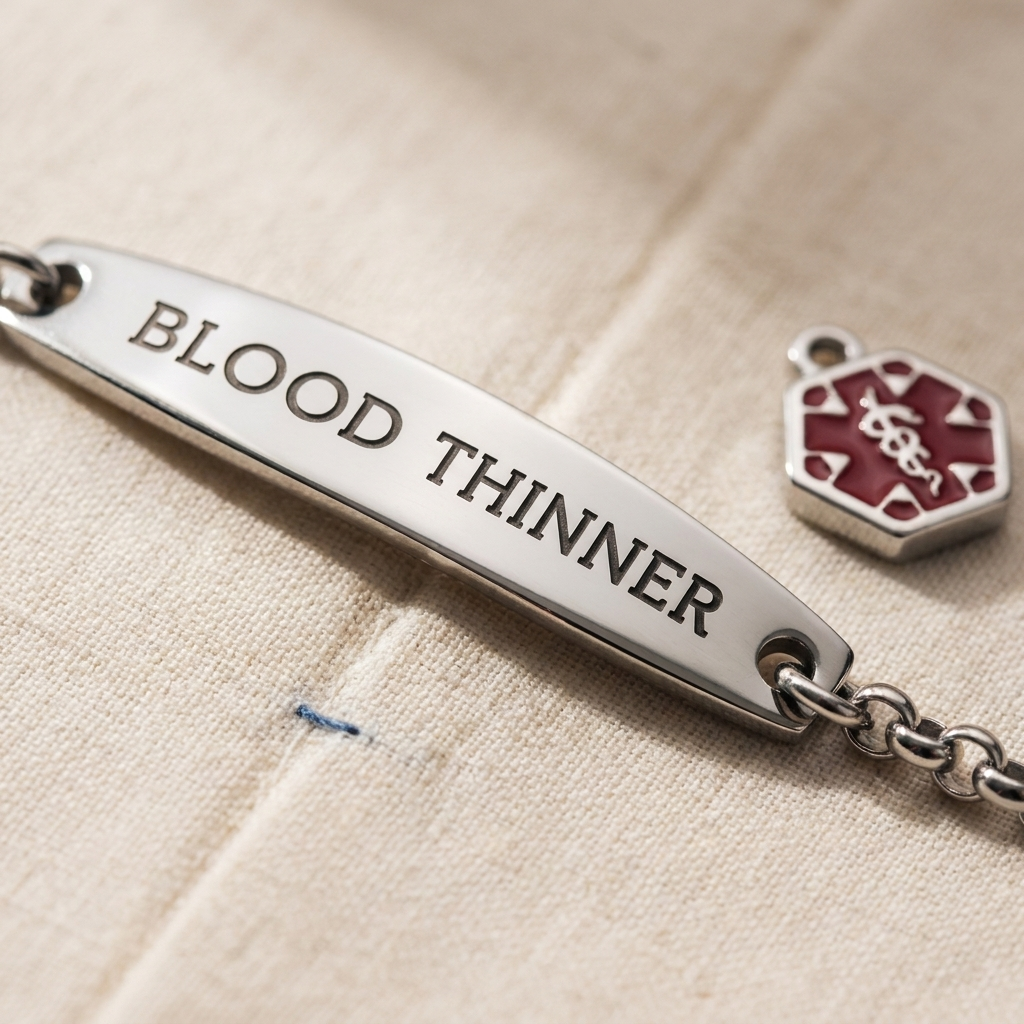
This is not a preference, it is a protocol, and it runs the same way in every service in the country. Airway, pulse, wrist, neck, chest. Your wrist is in a stranger's hand before anybody has asked your name, because that is where a radial pulse is taken. Anything sitting there is read for free.
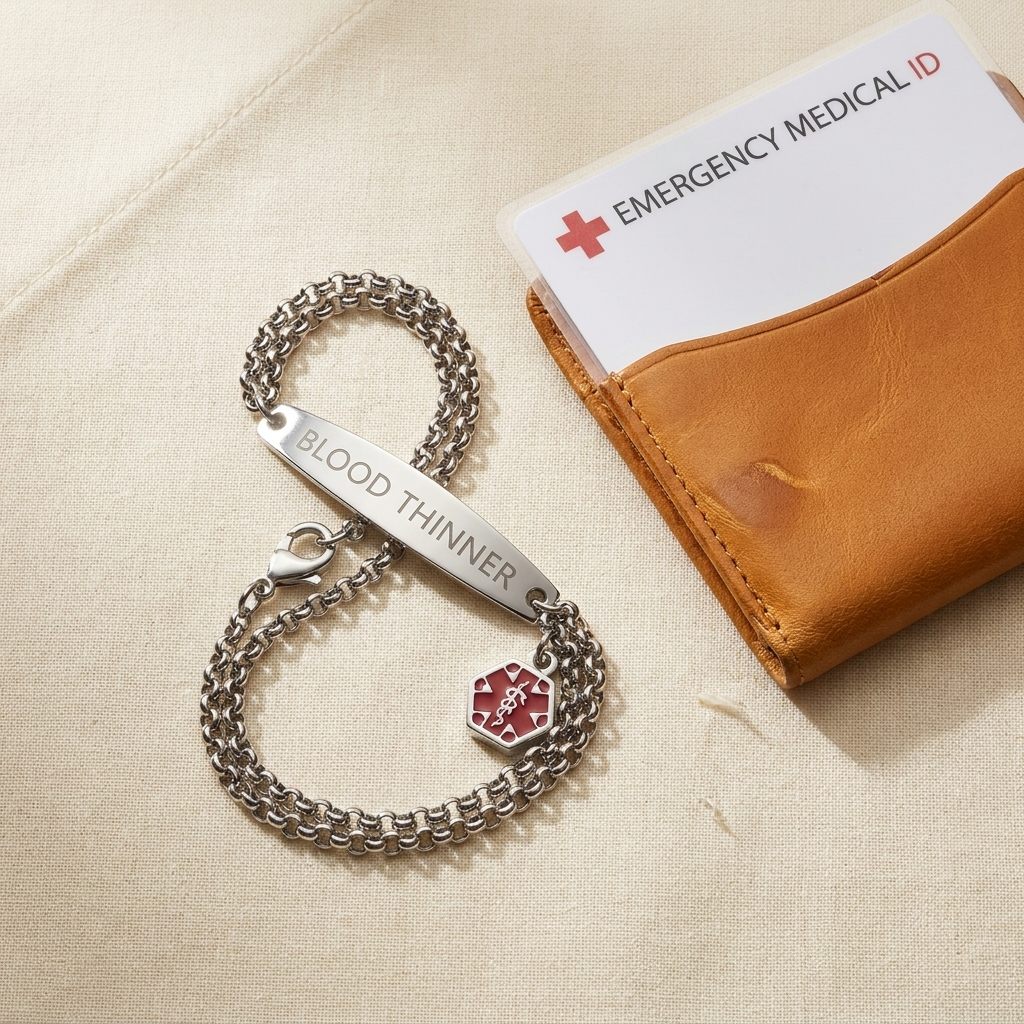
So the bracelet carries two words in surgical steel: BLOOD THINNER. The category, not the brand, because cardiologists move women between Eliquis, Warfarin and Xarelto for cost and kidney function, and a plate with a brand name on it is wrong the day your prescription changes. The free Emergency ID Card carries the specific drug, and that is the part that updates.
👉 Get the engraving that stays true →
Which leaves the only objection I have never been able to argue a woman out of.
7. It looks like jewelry. It reads like a chart.
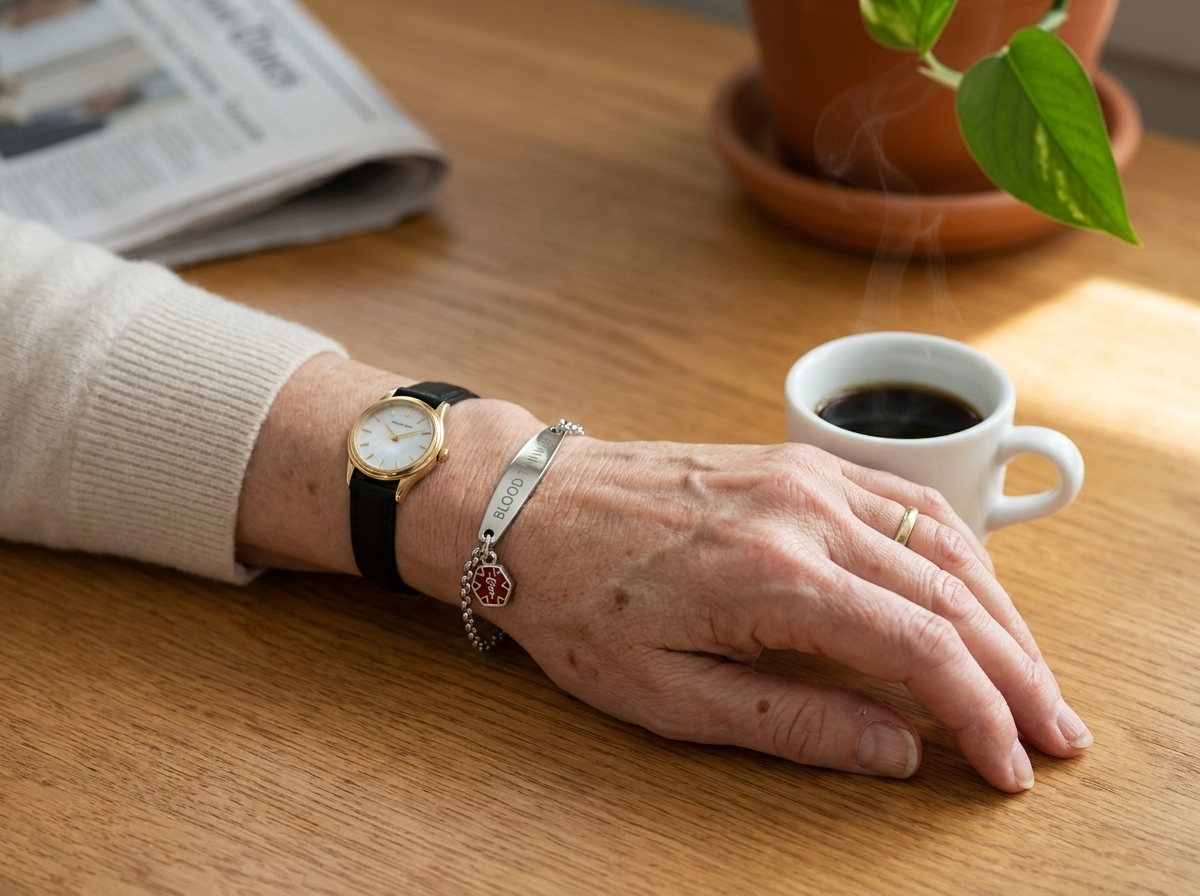
“I don't want to look sick.” I have heard it for sixteen years, and about the old tags they were right. The medical IDs of the 1990s looked like hospital equipment. This one is a polished plate on a rolo chain you would find at a jeweller's, with the Star of Life as a small charm rather than a billboard.
I ordered three of these last year. One for my sister, one for my best friend, one for me. I have not taken mine off since. Seventeen thousand women wear one daily, and the line they keep writing to us is not about emergencies at all. It is that they stopped thinking about it by the second week.
The Wrist-Check Bracelet®
A polished plate on a rolo chain, 316L surgical steel, the same alloy used for medical implants. Hypoallergenic, dishwasher safe, and laser-etched rather than printed, so the engraving does not fade in a shower, a pool or six years of washing up. One size, with an adjustable clasp.
It ships with two things, both free. The Emergency ID Card carries your specific medication and your emergency contact, and it is the part that updates when your prescription does. The protective case keeps it in your purse rather than at the bottom of a drawer.
Wear it for 60 days. If it is not what I said it was, send it back for a full refund and keep both gifts. Lose it or break it inside the first year and it is replaced free, no proof required. The engraving is guaranteed for life. $24.99, once.